
Landscape Guides & Advice
Practical answers about plants, materials, costs and project preparation for your Lutz or Tampa Bay landscape.
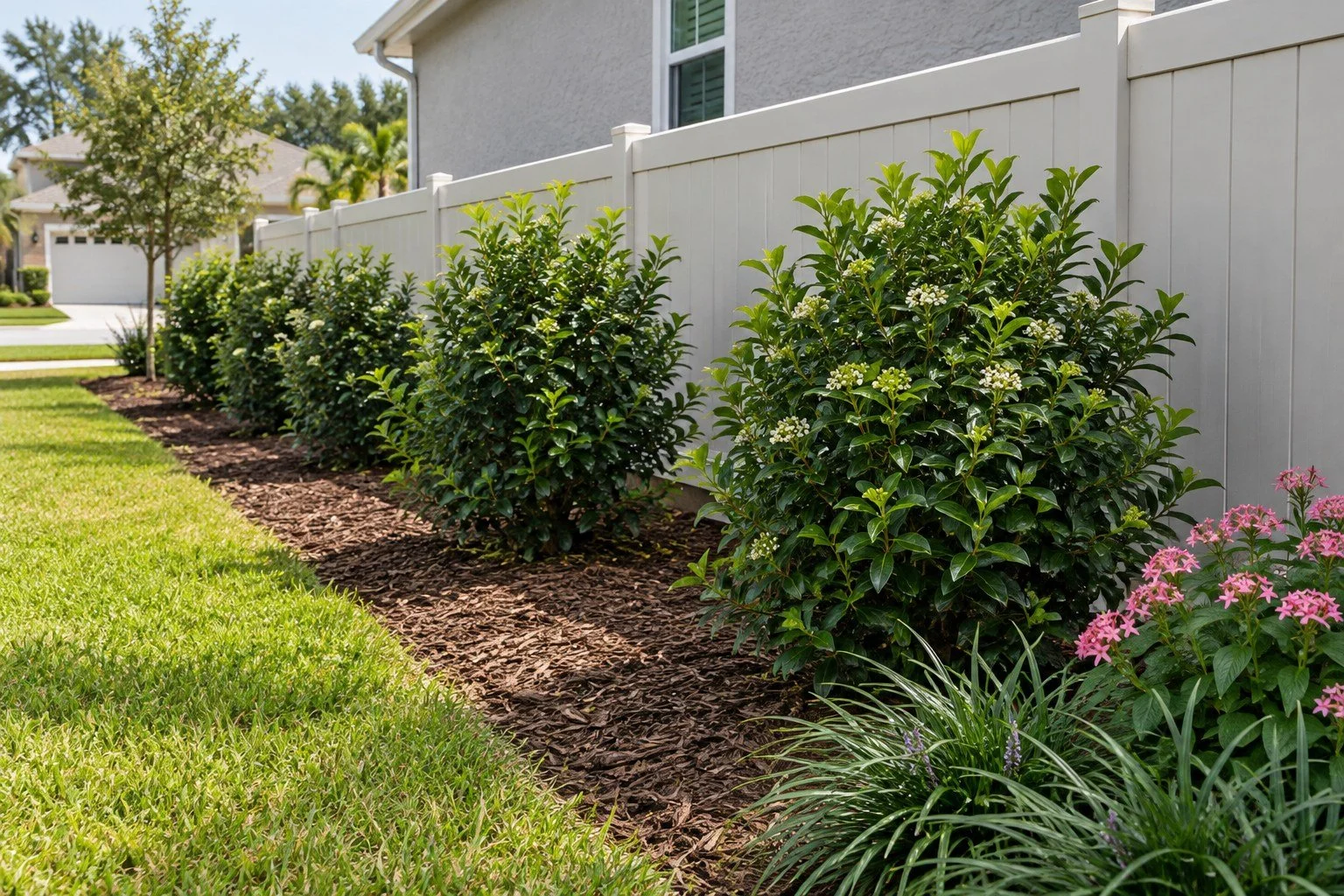
How Far Apart Should Privacy Hedge Plants Be Spaced?
How far apart to plant podocarpus, viburnum and clusia privacy hedges, how many plants you need, fence distance, a free plant counter and a visual hedge simulator.
Quick answer: space privacy hedge plants by center-to-center distance based on the plant and the nursery size. As a starting point, podocarpus is commonly planted about 2 feet apart in 3- or 7-gallon sizes and 3–4 feet apart in 15- or 30-gallon sizes, and sweet viburnum about 3 feet apart in 3-gallon sizes and about 4 feet apart in 7-gallon and larger. To count plants for a straight row: Row length ÷ spacing + 1 = plants
Privacy hedge spacing should follow the selected plant, the size being installed and the width available for the finished hedge. There is no single spacing that works for every plant sold as a privacy hedge. For a homeowner comparing estimates, the important question is not simply "How many plants?" It is "What will this row look like on installation day, and how will it fit as it grows?" This guide covers how spacing is measured, typical spacing for popular Tampa Bay hedge plants, how to count plants for single and double rows, how far to plant from a fence, and the mistakes that cause hedges to look thin years later.
See the spacing before you plant
The RLC Privacy Hedge Preview lets you place sweet viburnum, clusia or podocarpus beside a fence and a person for scale. Change the nursery size, the center-to-center spacing, the fence height and the growth stage, then see how much of the fence the row actually screens.
Open the Privacy Hedge Preview
Compare 3, 7, 15 and 30-gallon plants, drag the spacing slider and copy your preferred layout to bring to your estimate.
How to use the hedge preview
- Choose your hedge. Pick the plant you are considering. Each has a different leaf size, width and habit.
- Choose the starting size. Switch between 3, 7, 15 and 30-gallon containers to see the installed height and width.
- Set the fence. Match your fence height, or uncheck the fence to see the plants screening an open view.
- Adjust spacing. Move the spacing slider and leave "Fill the row automatically" on to see how the plant count changes.
- Move the timeline. Slide forward to see an illustrative picture of the hedge as it grows.
- Change the view. Use the front, perspective and close-up views to check gaps from different angles.
- Copy your layout. Paste it into your estimate request so the proposal starts from what you liked.
What does center-to-center mean?
Center-to-center spacing measures from the center of one plant to the center of the next. It does not describe the visible gap between leaves. Two estimates with the same spacing can produce different levels of privacy on installation day when the plants have different widths.
For example, a plant approximately three feet wide, spaced four feet apart from center to center, leaves roughly a one-foot gap between the leaves when viewed straight on. The same plant spaced three feet apart will just touch. This explains the measurement; it is not a spacing recommendation, since branches are uneven and gaps look different from different angles.
Typical spacing for popular privacy hedges
| Plant | 3-gallon | 7-gallon | 15-gallon | 30-gallon | Notes |
|---|---|---|---|---|---|
| Podocarpus (yew pine) | ~2 ft | ~2 ft | ~3 ft | ~4 ft | Narrow, upright; tolerates tight trimming; good for narrow beds. |
| Sweet viburnum | ~3 ft | ~4 ft | ~4 ft | ~4 ft | Large, full leaves; needs a wider bed and room to be trimmed. |
| Clusia (small-leaf) | ~3 ft | 3–4 ft | ~4 ft | 4–5 ft | Dense, thick leaves; best in warm, protected spots. |
| Green Island ficus (low hedge) | 1.5–2 ft | ~2 ft | — | — | Low border hedge, not a tall privacy screen. |
These are common starting points for single, trimmed hedge rows in Tampa Bay. Your final spacing should account for the specific variety, how tall and wide you plan to keep the hedge, sun exposure, irrigation and how quickly you need privacy. The University of Florida's notes on sweet viburnum are a helpful reference for its mature size. Not sure which plant fits? Read what is the best privacy hedge for a Lutz or Tampa yard.
How many hedge plants do you need?
For a straight row with a plant at each end, divide the length by the spacing and add one. A 60-foot row at 2-foot spacing is 60 ÷ 2 + 1 = 31 plants. If the row starts half a space in from a wall or corner, skip the "+1."
Counts are for planning. Match spacing to the plant and container size, then compare it against your estimate.
Single row vs. staggered double row
A single row is standard for a trimmed privacy hedge. A staggered double row places a second row offset between the plants of the first, like a zigzag. It fills in faster and creates a thicker, more wind-resistant screen, but it needs a wider bed (often 4–6 feet), roughly twice the plants and more irrigation coverage.
Bigger plants farther apart, or smaller plants closer?
Larger nursery sizes give privacy sooner and need fewer plants per foot, but each plant costs much more. Smaller sizes planted closer establish quickly and cost less per foot, but take longer to reach full height. If you need screening this season, larger sizes usually win. If you can wait a few growing seasons, smaller sizes stretch the budget.
How far from the fence should a hedge be planted?
A hedge planted tight against a fence has nowhere to grow except forward, and the back side cannot be trimmed or inspected. As a rule of thumb, set the center of the row at least half of the hedge's intended width off the fence, plus room to work. For many privacy shrubs that is roughly 2 to 3 feet from the fence to the plant centers. Also check:
- HOA rules and property lines, especially for hedges on a shared boundary
- Sight lines at driveways and corners, where tall hedges can block traffic views
- Underground utilities: call 811 before digging
- Irrigation heads and drip lines that need to reach every plant
- Roof overhangs and gutters that can block rain or dump water
Should plants touch on installation day?
Not necessarily. Plants that touch immediately may be spaced too closely for their mature width, which leads to crowding, interior dieback and more disease pressure later. Plants that are too far apart can leave gaps for years. The right spacing balances how soon you need privacy with how the hedge will look and grow over time, and it should be explained in the estimate.
Soil, water and mulch: what makes spacing work
- Bed prep. Remove grass and weeds from the full bed width, not just the planting holes.
- Irrigation. New hedges need consistent water while roots establish. Drip line run along both sides of the row delivers water right to the root balls.
- Mulch. A 2–3 inch layer of mulch keeps roots cool and moist; keep it pulled back from stems. Use the mulch measuring guide and calculator to size the bed.
- Trimming. Light, regular trimming encourages branching and a fuller screen. Trim the top slightly narrower than the base so lower leaves get sun.
Common hedge spacing mistakes
- Planting too close to look full immediately, then losing interior leaves as plants crowd each other.
- Planting too far apart to save money, leaving gaps that take years to close.
- Planting against the fence with no room to trim the back.
- Mixing sizes in one row, which grows in unevenly.
- Skipping irrigation for a long row where hand watering never reaches every plant.
- Choosing a plant for the wrong space, like a wide viburnum in a narrow side yard.
Get these details in your estimate
- Plant variety and container size
- Center-to-center spacing and total plant count
- Single or staggered double row
- Distance from the fence or wall
- Bed width, prep and mulch depth
- Irrigation method (drip line or existing zone adjustments)
- Establishment watering instructions
Learn more about RLC privacy hedge installation.
Ready to plan your privacy hedge?
Bring your layout from the hedge preview or your measurements, and RLC will recommend the plant, size and spacing that fit your yard and timeline.
Frequently asked questions
How far apart should privacy hedge plants be spaced?
It depends on the plant and the size installed. Podocarpus is commonly planted about 2 feet apart in 3- or 7-gallon sizes and 3 to 4 feet apart in 15- or 30-gallon sizes. Sweet viburnum is commonly planted about 3 feet apart in 3-gallon sizes and about 4 feet apart in 7-gallon and larger sizes. Always confirm spacing against the specific variety and the width you have.
How do I calculate how many hedge plants I need?
For a straight single row with a plant at each end, divide the row length in feet by the spacing and add 1. A 60-foot row at 2-foot spacing needs 31 plants. For a staggered double row, calculate each row and add them together.
What does center-to-center spacing mean?
It is the distance from the middle of one plant's trunk or root ball to the middle of the next. It is not the gap between the leaves.
How far from a fence should I plant a hedge?
Plant far enough off the fence that the hedge can reach its intended width without pressing into it, and leave room to trim the back side. For many privacy shrubs that means roughly 2 to 3 feet from the fence to the center of the plant.
Is a single row or double row better for privacy?
A single row is usually enough for a trimmed hedge. A staggered double row fills in faster and creates a thicker screen, but it needs a wider planting bed and more plants.
What happens if hedge plants are too close together?
Crowded plants compete for water and light, lose interior leaves, stay damp longer and are more prone to disease. They can look full on day one and thin out a few years later.
Is it better to plant bigger hedge plants farther apart or smaller plants closer together?
Larger plants give privacy sooner with fewer plants but cost more each. Smaller plants spaced closer are less expensive per plant and establish quickly, but take longer to reach height. The right choice depends on budget and how soon you need screening.
How long does a privacy hedge take to fill in?
It varies by plant, size, sun, irrigation and care. Larger nursery sizes close gaps sooner, while smaller sizes can take a few growing seasons. Consistent watering during establishment makes the biggest difference.
Keep planning
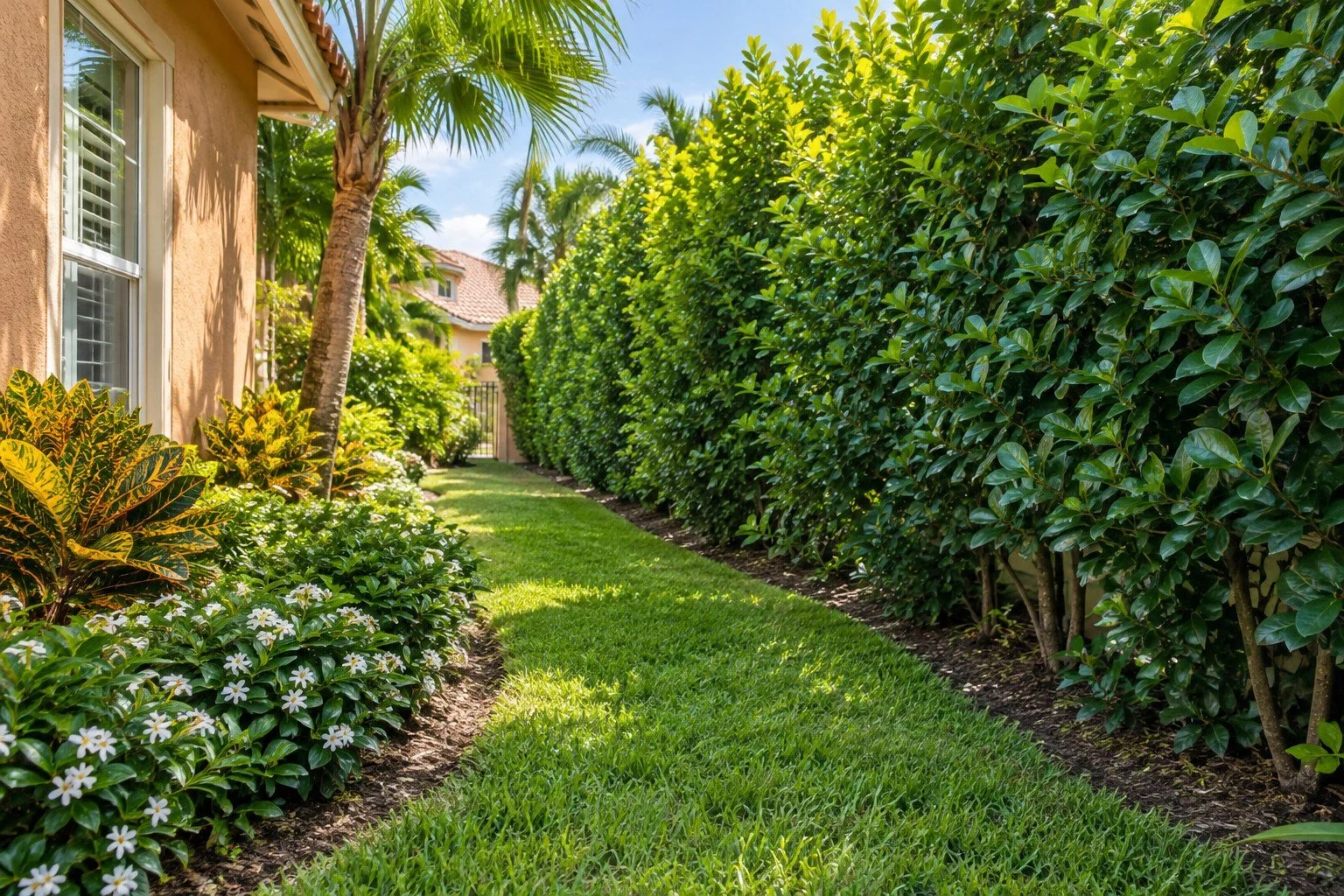
What Is the Best Privacy Hedge for a Lutz or Tampa Yard?
Choose a privacy hedge around the view you want to screen, available planting width, sunlight and the maintenance you can realistically provide.
The best privacy hedge is the one that fits the space and blocks the view that bothers you. For many Tampa-area properties, sweet viburnum is worth considering. It still needs the right location, enough room to grow and a realistic maintenance plan.
A hedge chosen only because it looks dense at the nursery can become an expensive problem beside a narrow walkway, driveway or pool enclosure.
Why consider sweet viburnum?
Sweet viburnum, Viburnum odoratissimum, provides a full, green screen throughout the year and can be maintained as a hedge or allowed to form a more informal screen. UF/IFAS notes that sunny positions help keep it dense; shade can produce a thinner appearance. It can also become a large plant when left unpruned, so decide how tall and wide you want to keep it. See the UF/IFAS sweet viburnum guide.
Start with the view you want to block
Stand where you actually want privacy: the patio chair, pool deck, kitchen window or bedroom. Identify the direction and height of the unwanted view. A hedge that screens a seated patio may need a different position from one intended to interrupt a view from a neighboring upstairs window.
Measure the usable planting strip, allowing space for the finished hedge and access to maintain it. Mark gates, equipment and utility access points before deciding where the row begins and ends. A fence may not mark the exact property line. Confirm the boundary before planting.
What to ask before choosing your hedge
Ask for the proposed variety, approximate starting height and starting width.
Discuss how much screening will exist on installation day.
Ask what gaps will remain and what conditions affect them filling in.
Agree on the maintained height and depth, including how both sides can be trimmed.
Plan how you will water the new hedge while its roots settle in, and check that the sprinklers reach the entire row.
When should you consider another plant?
A very narrow bed, heavy shade, salty coastal exposure or little room for trimming may call for a different selection. Explain those conditions when requesting your estimate. The same plant will not suit every part of a yard. A short, well-positioned screen can be more useful than a long row that misses the important view.
RLC's privacy hedge installation service can help plan the right plants, placement and installation work. Next, read our guide to privacy hedge spacing.
Planning a hedge in Lutz or the Tampa area? Request a free estimate from RLC Lawn & Landscape or call (813) 767-4022.
How Much Does a Landscape Renovation Cost in Tampa?
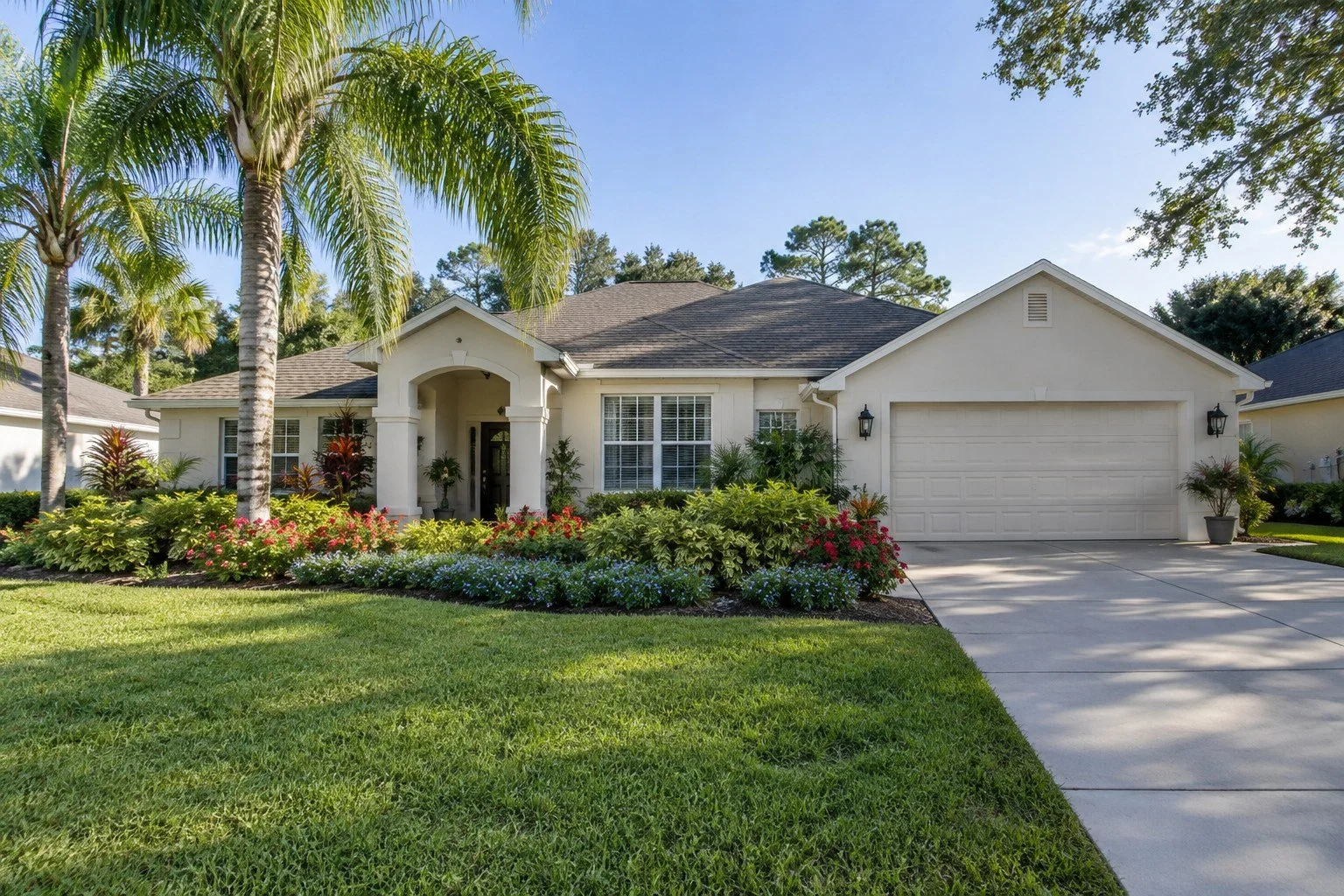
See what changes the price of a landscape renovation, how to compare estimates, and when it makes sense to complete the work in stages. Image: AI-generated landscape inspiration, not an RLC customer project.
The cost depends on what your yard needs—not just its size. Refreshing a few planting beds is a different job from removing old landscaping, adding privacy hedges and palms, adjusting sprinklers and installing a new lawn. Start with the result you want, then compare estimates for the same work.
What affects the price?
Preparing the yard: Removing overgrown plants, roots or old materials takes time. Narrow access can also make the work harder.
Plants and materials: The number, variety and starting size of plants matter. So do the amounts of sod, mulch, rock and edging.
Work below the surface: Sprinkler changes and lighting wire should be planned before new planting and lawn go in.
Finishing the job: Delivery, debris removal, cleanup and repairing disturbed areas should be included in the written estimate.
What could a $10,000 budget cover?
There is no standard $10,000 package. One yard might need an updated entrance with layered planting and lighting. Another might need a long privacy hedge and substantial removal work. A visit to your property is the best way to work out what fits.
Tell us your top priority—more privacy, a better-looking entrance, a healthier lawn or a complete refresh. Ask which items are essential and which could be added later. Smaller, well-defined projects can make sense too.
How to compare estimates fairly
Look beyond the total. Each estimate should explain the plant varieties and sizes, quantities of materials, preparation, sprinkler work and cleanup. It should also state what is not included. If the description only says “landscaping,” ask for more detail.
Can you do the work in stages?
Yes, when each stage follows one overall plan. Set the bed layout and plan underground work first. That helps prevent a later project from digging up a finished lawn or damaging new plants.
Explore our landscape design and installation service or read the best order for a landscape renovation.
Start with your priorities
RLC Lawn & Landscape is based in Lutz, Florida. Tell us where you are, what you would like to change and your approximate budget.
Request a free estimate or call (813) 767-4022.
Featured image: AI-generated Florida landscape inspiration, not an RLC customer project.