
Landscape Showroom / RLC Selection Guide
Mini Pine Bark Mulch for Tampa Landscapes
Small, irregular bark pieces give planting beds a warm brown finish that works with both tropical foliage and a restrained green palette. Mini pine bark is an organic surface covering: it changes over time and should be treated as a maintained layer, not a permanent floor.
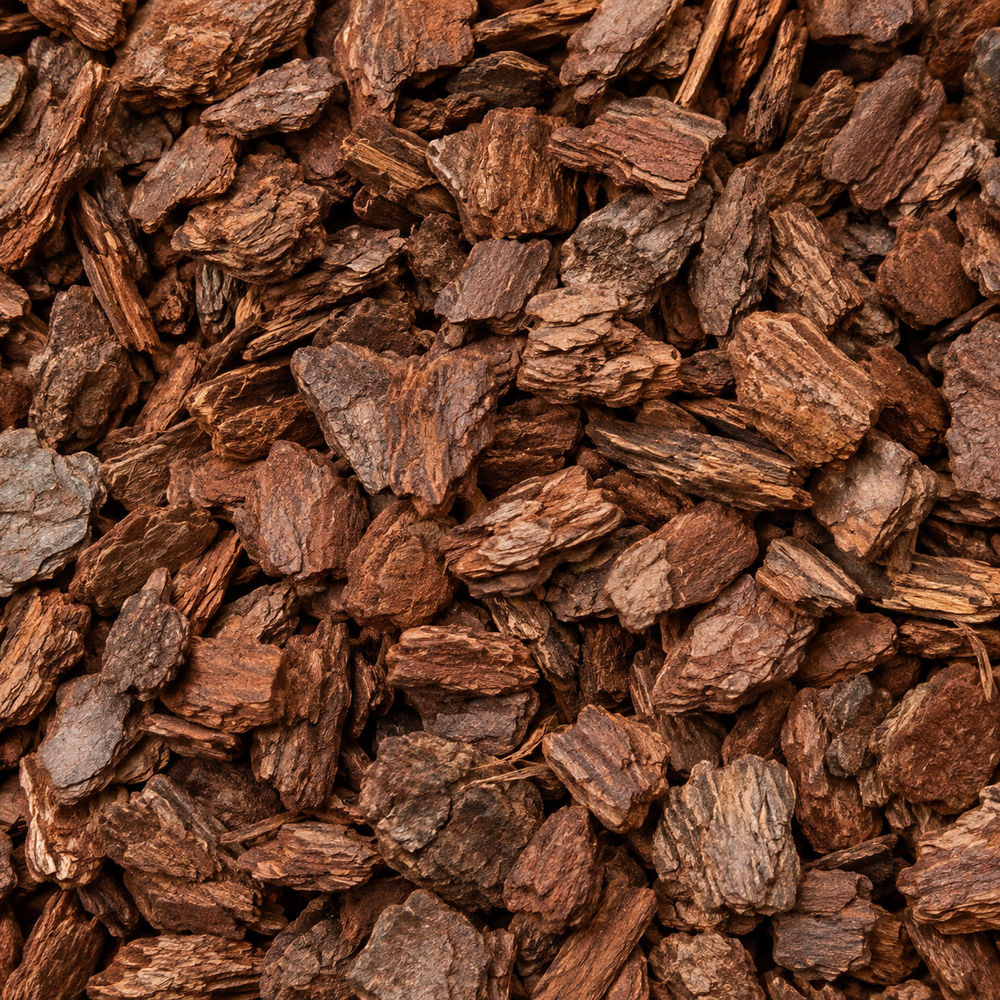
AI-generated illustration. Actual plants and materials vary; confirm the supplied selection with RLC.
At a glance
Material
Organic pine bark; natural texture and color variation
Best use
Defined planting beds with appropriate drainage
Sizing
Mini describes a screened category, not identical pieces
Cost
Project quote; area, depth, delivery and preparation matter
Where it works best
Use it to connect planting along the house, frame a hedge or finish a refreshed bed. Its smaller texture is useful around modest-sized shrubs and accent flowers. A clear edge against St. Augustine sod keeps the bed legible and makes future maintenance simpler.
Depth and preparation
Measure the existing mulch before adding more. The goal is an appropriate finished layer, not a fresh blanket piled over old material every visit. Remove established weeds and unwanted debris first. Keep mulch away from trunks and plant crowns, and keep building clearances visible. Low spots and drainage problems need a separate solution.
What it does—and does not do
Organic mulch helps moderate the soil surface and reduces moisture loss. It can discourage some weeds, but windblown seeds can still germinate in it. It gradually decomposes, so its texture and depth change. Do not use mulch to conceal buried irrigation parts or to raise the soil level against a house.
Maintenance in a Tampa yard
Check displacement after strong rainfall or irrigation. Pull small weeds before they establish, loosen matted areas where appropriate and replenish based on the remaining layer. Heavy runoff may call for a different surface or drainage correction rather than repeated mulch replacement.
Compare with decorative rock
Bark is easier to refresh around changing plantings and contributes organic material as it breaks down. Rock lasts longer as a physical material but collects debris, can increase heat and is harder to remove when a bed changes. The best choice depends on the location, not just the showroom color.
What to include in your estimate
Send the approximate bed area, photos of the existing surface and information about access. Note whether weeds, old rock or heavy debris need removal. Ask whether edging repair and plant installation should be included so the finished bed is handled as one scope.
Common question
Can you simply add more mulch over what is there?
Sometimes, after checking the current depth and condition. Excess material should be corrected rather than buried under another layer.
Bring the right details together
RLC Lawn & Landscape is based in Lutz and serves Tampa Bay. Share photos of your yard, approximate measurements and the options you like. We’ll discuss what fits the site and the work involved.
Reference: Plant or product information. Planning guidance reviewed September 2026. Availability and installed prices are confirmed by quote.