
Landscape Showroom / RLC Selection Guide
Red Ti Plant for Tampa Landscapes
Cordyline fruticosa
Also called: Ti plant; Hawaiian ti; often written ‘red ti’ or ‘red tai’; formerly Cordyline terminalis
Red ti gives a landscape upright burgundy or pink-red leaves and a clear vertical accent. It is most convincing in a protected tropical bed where its leaf color can contrast with softer green planting.
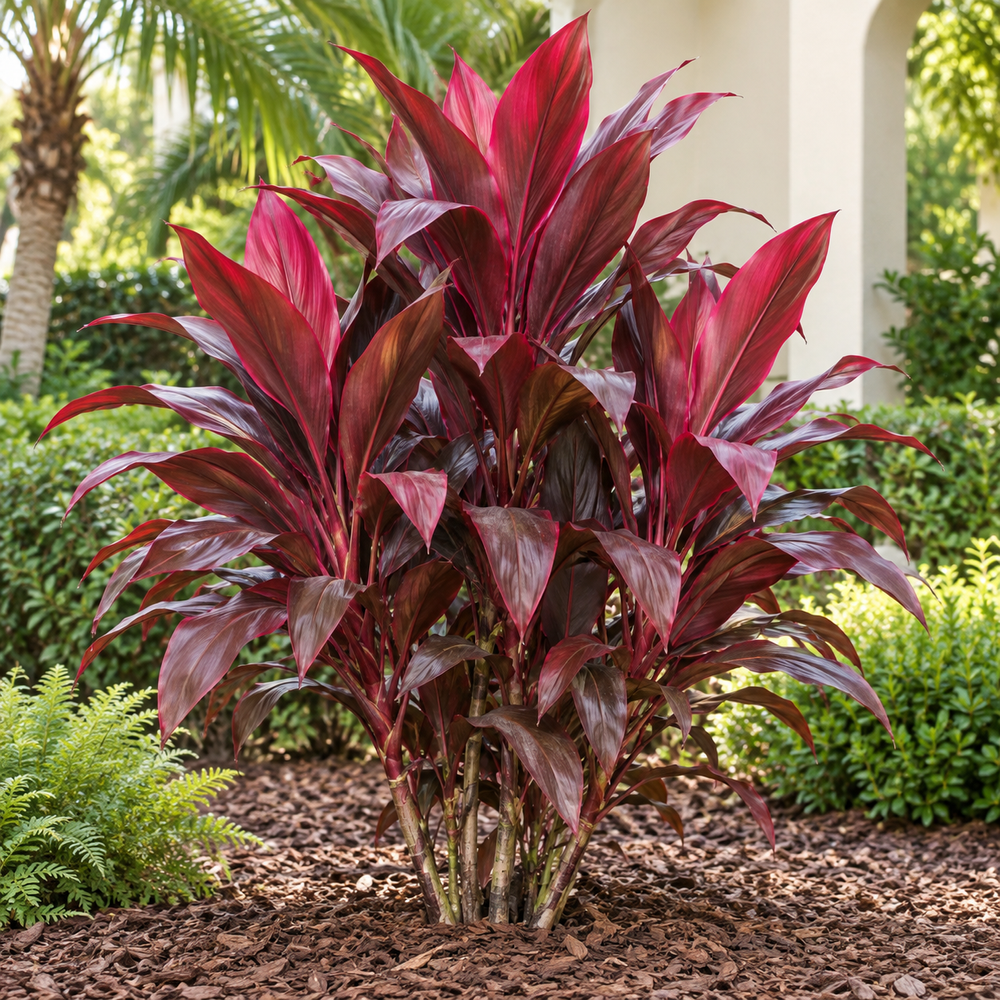
AI-generated illustration. Actual plants and materials vary; confirm the supplied selection with RLC.
At a glance
Climate & cold
Tropical, frost-sensitive plant; use protected Tampa-area locations
Mature scale
Several feet tall; many selections develop visible canes
Sun & shade
Bright partial shade or suitable filtered sun; cultivar dependent
Water & drainage
Consistent moisture with drainage; drought can spoil foliage
Where it fits
Position a group behind low border plants but in front of a taller green screen. Leave room for the leaves to arch without catching on a gate or window. The plant’s narrow stem footprint does not mean its foliage should be squeezed into a narrow strip.
Sizes and varieties
Red Sister and other red or pink selections differ in color and habit. A pot with several cut canes can look fuller than a single-stem specimen of the same gallon class. Confirm cultivar, height and stem count before ordering.
Care through the seasons
Use the leaves as an early signal that the site needs attention: dry tips, scorching and faded color can reflect water or exposure issues. Remove old lower leaves without stripping every cane bare. Wait after cold injury before deciding which canes will recover.
Placement mistakes to avoid
Avoid severe afternoon reflected heat, drying wind and exposed freeze-prone areas. It is not a dependable stand-alone winter privacy barrier. Keep away from pets that chew ornamental foliage.
Buying size is not finished size
Commonly 3- and 7-gallon; confirm cane count and fullness. These are nursery formats to ask about, not a live stock list or a guaranteed height. Compare the actual canopy, root ball, cultivar and overall condition. Leave room for the mature plant, even when a new installation initially looks open.
Planning the installation
Measure the usable bed, including space around windows, paths, utilities and irrigation. Show RLC both a wide view and the details of the existing ground. Discuss removals, preparation, access and watering before choosing a quantity. A larger plant may give more presence on day one, but the right location and establishment care still determine the result.
What affects cost?
Relative starting plant tier: $. A tier compares material categories; it is not an installed price. Nursery size, fullness, quantity, delivery access, removals and irrigation changes can alter the quote. Compare the whole scope, including the selected variety and size.
Common question
Why does a ti plant become leggy?
Cane growth and leaf loss naturally change its shape. Light, age and pruning matter. Plan its mature form into the bed instead of assuming it will remain a dense ball of leaves.
Bring the right details together
RLC Lawn & Landscape is based in Lutz and serves Tampa Bay. Share photos of your yard, approximate measurements and the options you like. We’ll discuss what fits the site and the work involved.
Reference: Plant or product information. Planning guidance reviewed September 2026. Availability and installed prices are confirmed by quote.