
Landscape Showroom / RLC Selection Guide
Simpson’s Stopper for Tampa Landscapes
Myrcianthes fragrans
Also called: Simpson stopper; twinberry
Simpson’s stopper offers small leaves, white flowers and berries in a Florida-native plant. It is a good option to compare when you want a softer, more natural screen or an evergreen accent with seasonal interest.
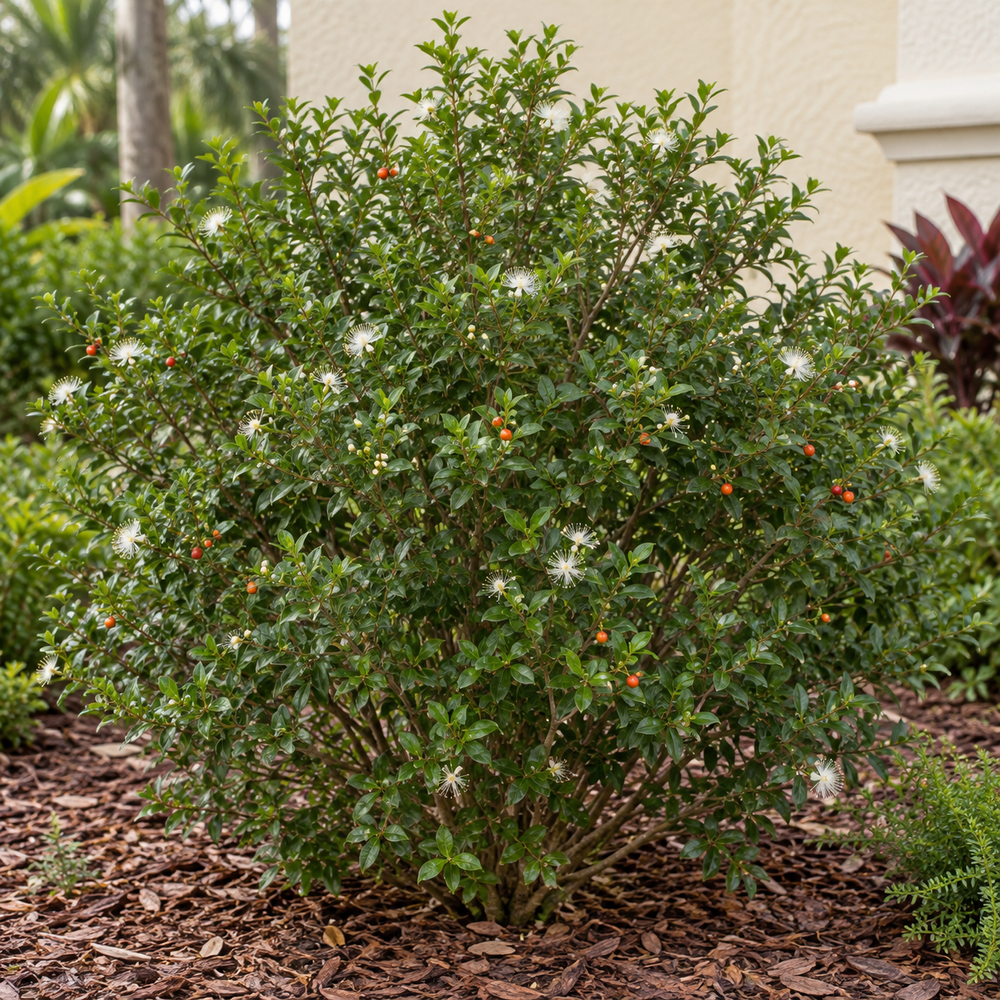
AI-generated illustration. Actual plants and materials vary; confirm the supplied selection with RLC.
At a glance
Climate & cold
Warm Florida landscapes; assess local winter exposure and selection
Mature scale
Standard forms can become a large shrub or small tree; dwarf selections remain lower
Sun & shade
Sun to partial shade
Water & drainage
Establish carefully; good drought tolerance after rooting in a suitable site
Where it fits
Use a shrub form for layered screening or allow a tree form to show its branching and bark. A wildlife-oriented bed can accommodate flowers and fruit better than a spot immediately above a pristine pool deck. Leave access for selective pruning.
Sizes and varieties
A dwarf selection such as ‘Compacta’ serves a different role from a standard shrub or a raised tree form. Ask which form the quote specifies. Bare lower trunks will not block a ground-level view the way a leafy shrub does.
Care through the seasons
Selective pruning preserves a natural outline and more of the flower display. Avoid shearing away every flush before it can bloom. Check irrigation during establishment, then reduce unnecessary watering as the root system develops. Keep lawn equipment away from stems.
Placement mistakes to avoid
Do not assume that ‘native’ means every soil, shade level or drainage condition is suitable. Match the form to the finished height and allow room for maintenance.
Buying size is not finished size
3-, 7- and 15-gallon shrub forms; tree forms and larger plants by quote. These are nursery formats to ask about, not a live stock list or a guaranteed height. Compare the actual canopy, root ball, cultivar and overall condition. Leave room for the mature plant, even when a new installation initially looks open.
Planning the installation
Measure the usable bed, including space around windows, paths, utilities and irrigation. Show RLC both a wide view and the details of the existing ground. Discuss removals, preparation, access and watering before choosing a quantity. A larger plant may give more presence on day one, but the right location and establishment care still determine the result.
What affects cost?
Relative starting plant tier: $$. A tier compares material categories; it is not an installed price. Nursery size, fullness, quantity, delivery access, removals and irrigation changes can alter the quote. Compare the whole scope, including the selected variety and size.
Common question
Is it better as a hedge or a small tree?
Both can work, but the plant must be selected and trained for that purpose. Choose low branching for screening and a deliberately raised form when the trunk is part of the design.
Bring the right details together
RLC Lawn & Landscape is based in Lutz and serves Tampa Bay. Share photos of your yard, approximate measurements and the options you like. We’ll discuss what fits the site and the work involved.
Reference: Plant or product information. Planning guidance reviewed September 2026. Availability and installed prices are confirmed by quote.