
RLC plant guide · Lutz & Tampa Bay
Sweet viburnum
Viburnum odoratissimum
A substantial green privacy screen for a yard with room to grow. The right starting size, spacing and access for maintenance matter more than simply packing plants close together.
$$ · Mid-range plant tier · Relative plant cost, not an installed price.
Save this in the showroom →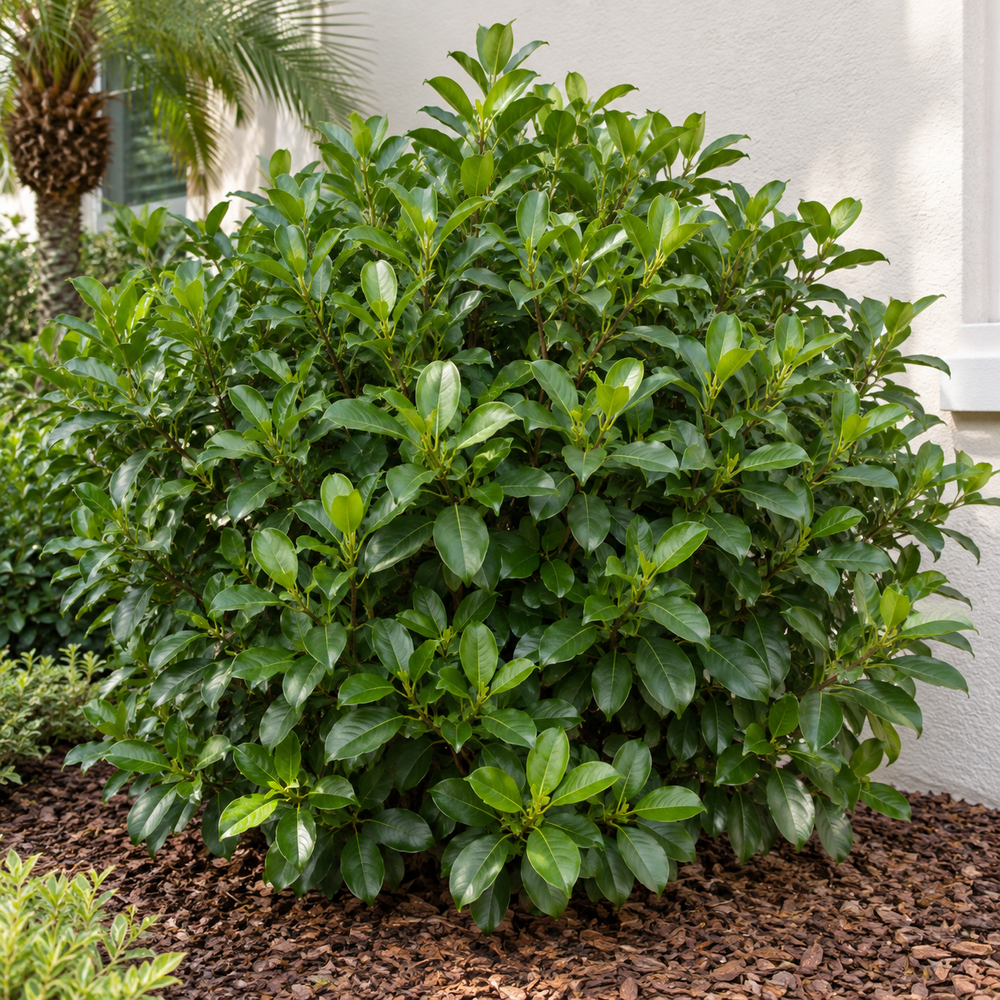
Know the plant
- Other names
- Sweet viburnum; odoratissimum; sometimes shortened to “viburnum odo” in landscape conversations.
- Plant family
- Adoxaceae.
- Plant type
- Evergreen woody shrub or small tree; not native to Florida.
- Climate guide
- Commonly grown in warm Zone 9–11 landscapes. Check the exact property’s cold exposure; zones describe winter minimums, not freeze-proof foliage.
- Full size
- Can reach roughly 25 feet tall and wide if left to develop. A maintained hedge is kept smaller through ongoing pruning.
- Foliage & flowers
- Broad green leaves and small fragrant white flower clusters in spring.
- Sun & soil
- Sun to partial shade; provide drainage and adequate root space.
- Water
- Regular establishment watering; established plants still need attention during prolonged dry weather. Avoid persistently saturated roots.
Where it fits
Sweet viburnum makes sense along a roomy boundary where a taller screen is wanted. It can soften a fence, create separation between yards or form the green backdrop behind shorter color plants.
It is a poor choice for a tiny strip where its natural width will constantly press against a sidewalk, air conditioner or wall. Plan the finished hedge width, not only the dimensions of a nursery pot.
For a layered Tampa landscape, keep the hedge toward the back and leave room for lower plants and a maintainable bed edge in front. The irrigation layout should reach each root ball without soaking a wall.
Nursery sizes: what to compare
3-, 7- and 15-gallon sweet viburnum are common nursery sale formats. Larger material may be available by request. These container labels do not guarantee one exact plant height or fullness.
A smaller plant usually lowers the initial material expense but takes time to fill in. A larger plant can offer a stronger starting screen, with greater handling, planting and establishment needs.
When comparing estimates, ask for container size, approximate installed height, fullness, quantity and spacing together. Ten sparse plants and ten full plants in the same nominal pot size may create very different results.
Sweet, Awabuki or dwarf Walter’s?
Typical sweet viburnum is the taller broad-leaved screening plant on this page. Awabuki is a related form with a larger, more polished-looking leaf.
Dwarf Walter’s viburnum is a compact selection of Viburnum obovatum, a different species with smaller leaves. It is not simply sweet viburnum kept short.
For a low foundation hedge, choosing a naturally smaller plant usually makes more sense than repeatedly forcing a tall screen into a small space. Confirm the botanical name and cultivar on the proposal.
Planting and long-term planning
Before deciding quantity, measure the usable bed and identify gates, utilities, drainage routes and access needed behind the hedge. Spacing should reflect the chosen stock and target width; there is no one correct distance for every viburnum project.
After installation, check moisture in the original root ball as well as the surrounding soil. Florida rain can be uneven, and wet-looking mulch is not proof that the roots received water. Keep mulch away from the trunk bases.
Allow a maintenance route and keep the hedge slightly wider at the base so lower growth receives light. Watch for thinning, persistent wilt or spotted foliage; an irrigation or drainage problem will not be solved by pruning alone. Heat waves can increase water stress even on an established screen.
Questions homeowners ask
How quickly will it give us privacy?
That depends on starting height, plant fullness, spacing, season and care. Choose the privacy level you need on installation day first; RLC can then compare a smaller-start option with fuller material. A fixed growth promise would be misleading.
Is there a dwarf sweet viburnum?
Do not rely on a generic dwarf label. Ask for the cultivar and botanical name. Dwarf Walter’s viburnum is commonly discussed as a compact alternative, but it is a different species.
Will the price tier tell me my hedge cost?
No. The $$ tier reflects the supplied list’s relative plant category. Quantity, stock size, removal, soil preparation, access and irrigation affect the complete installation price.
Choose it for the right place.
RLC Lawn & Landscape is based in Lutz. We can help coordinate your planting with privacy, mulch, edging, irrigation and the rest of your Tampa-area yard.
Plant references and nursery size examples: UF/IFAS sweet viburnum · UF/IFAS Awabuki · UF/IFAS Walter’s viburnum · Nursery size examples. Nursery listings are examples of sale formats, not a promise of RLC inventory. Exact cultivar, size, availability and price are confirmed with your estimate.